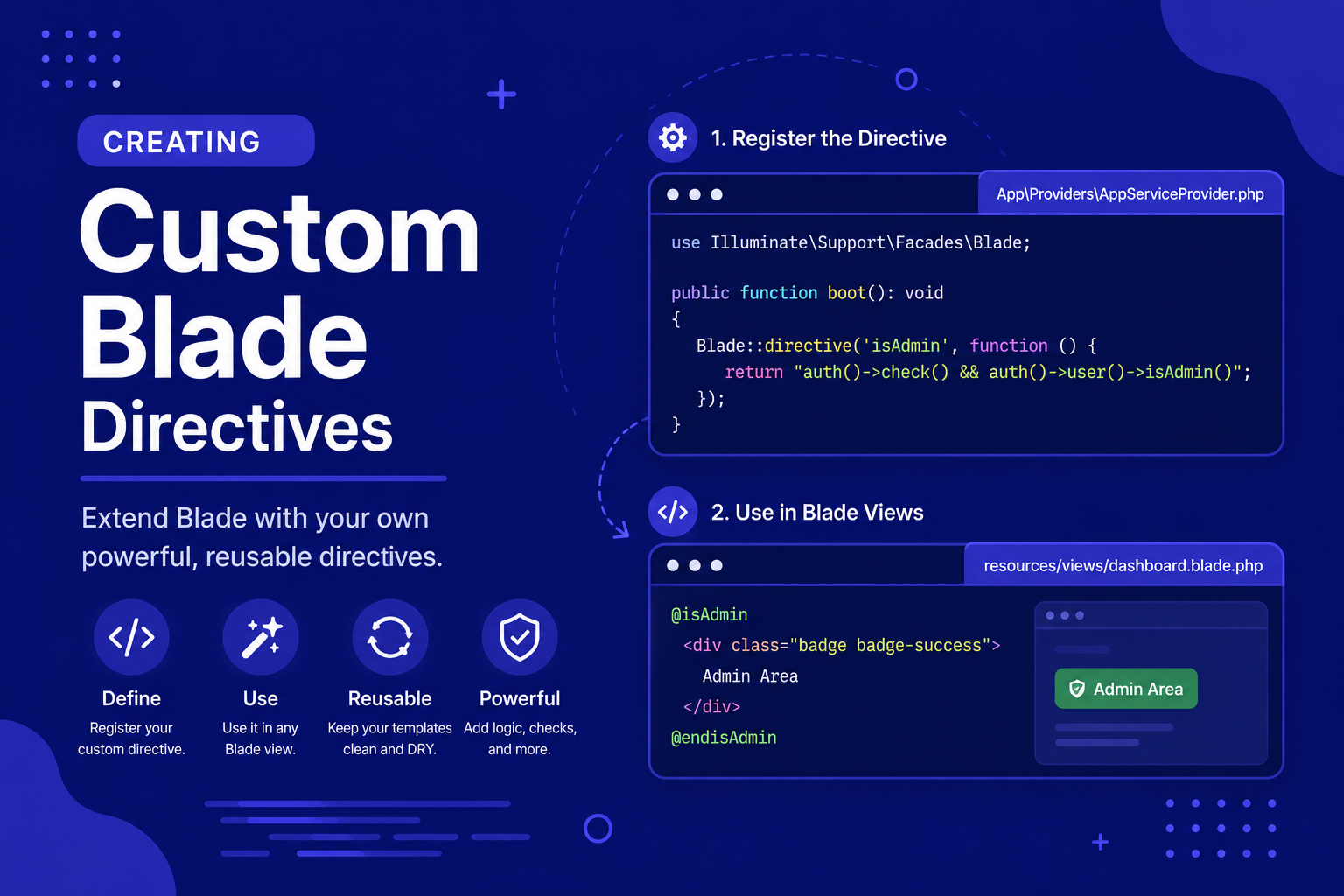
Creating Custom Blade Directives
In this final article of our Blade Templating category, we'll walk through how to create custom directives, from simple examples to slightly more advanced ones involving parameters.
Tips, guides, and insights to help you get more done.
In this final article of our Blade Templating category, we'll walk through how to create custom directives, from simple examples to slightly more advanced ones involving parameters.
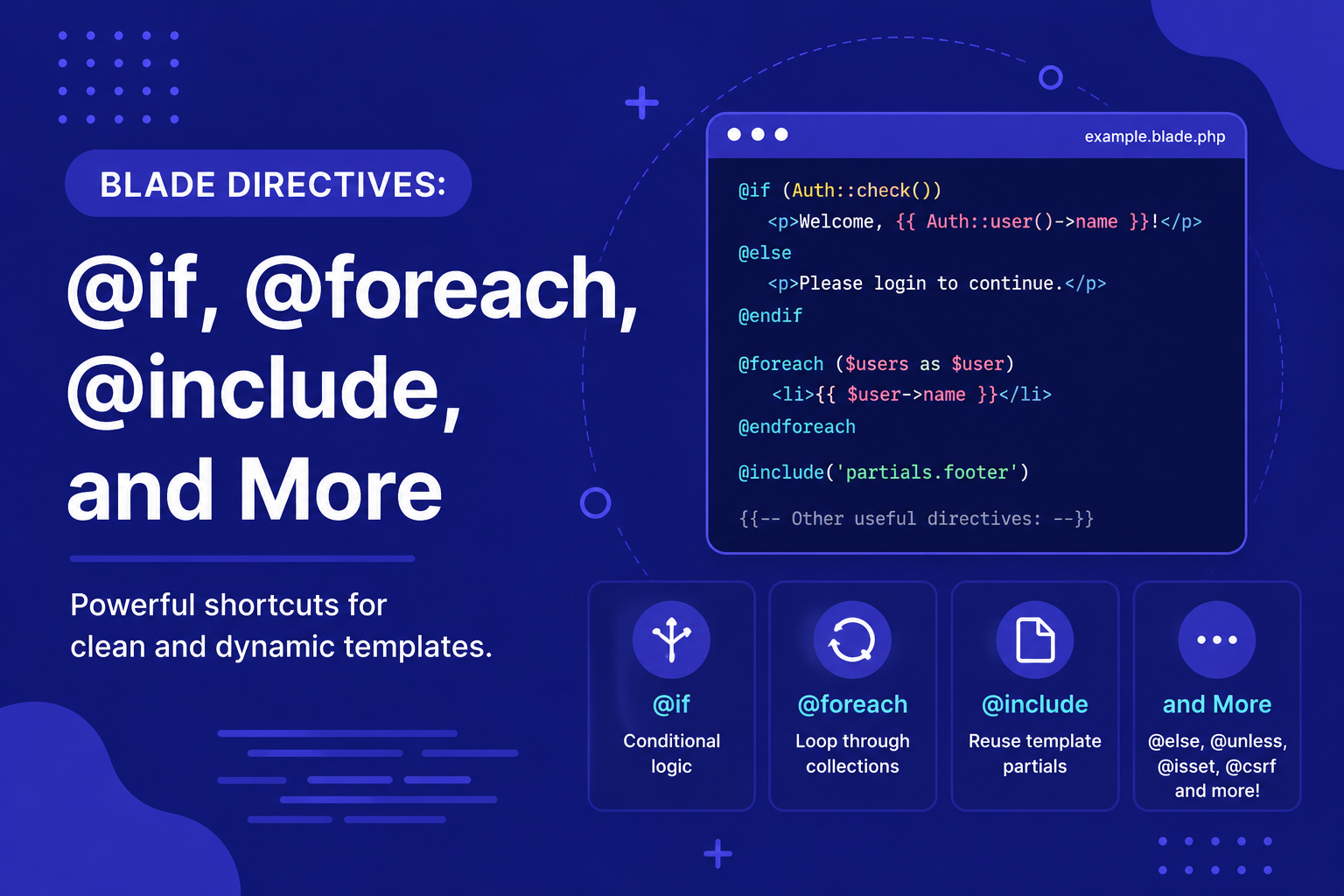
In this article, we'll walk through the most commonly used Blade directives you'll reach for constantly while building views.
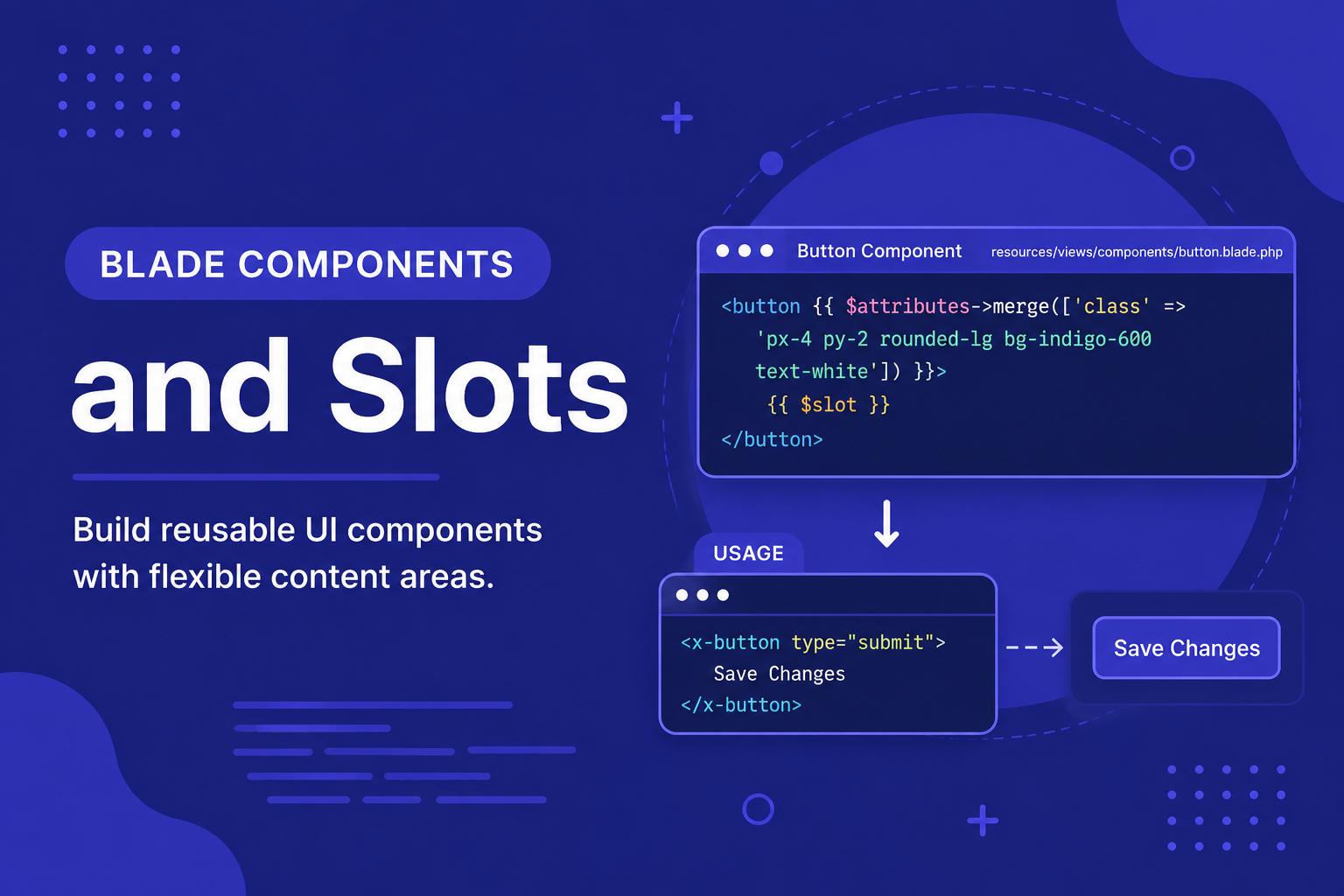
In this article, we'll cover how to create Blade components, pass data into them, and use slots to make them flexible enough to handle varying content.
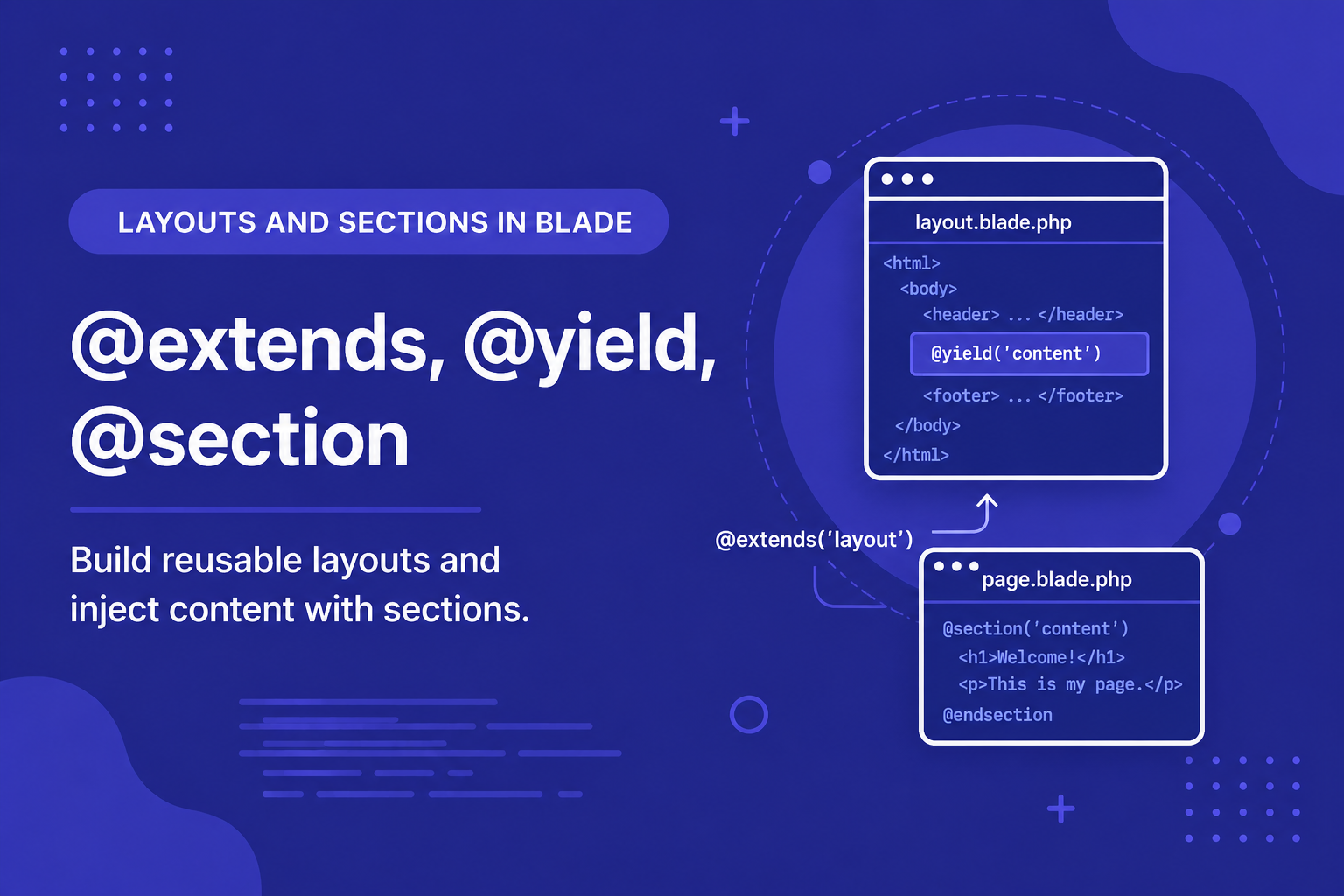
In this article, we'll walk through how to build a basic layout, extend it from individual pages, and manage multiple content sections within the same layout.
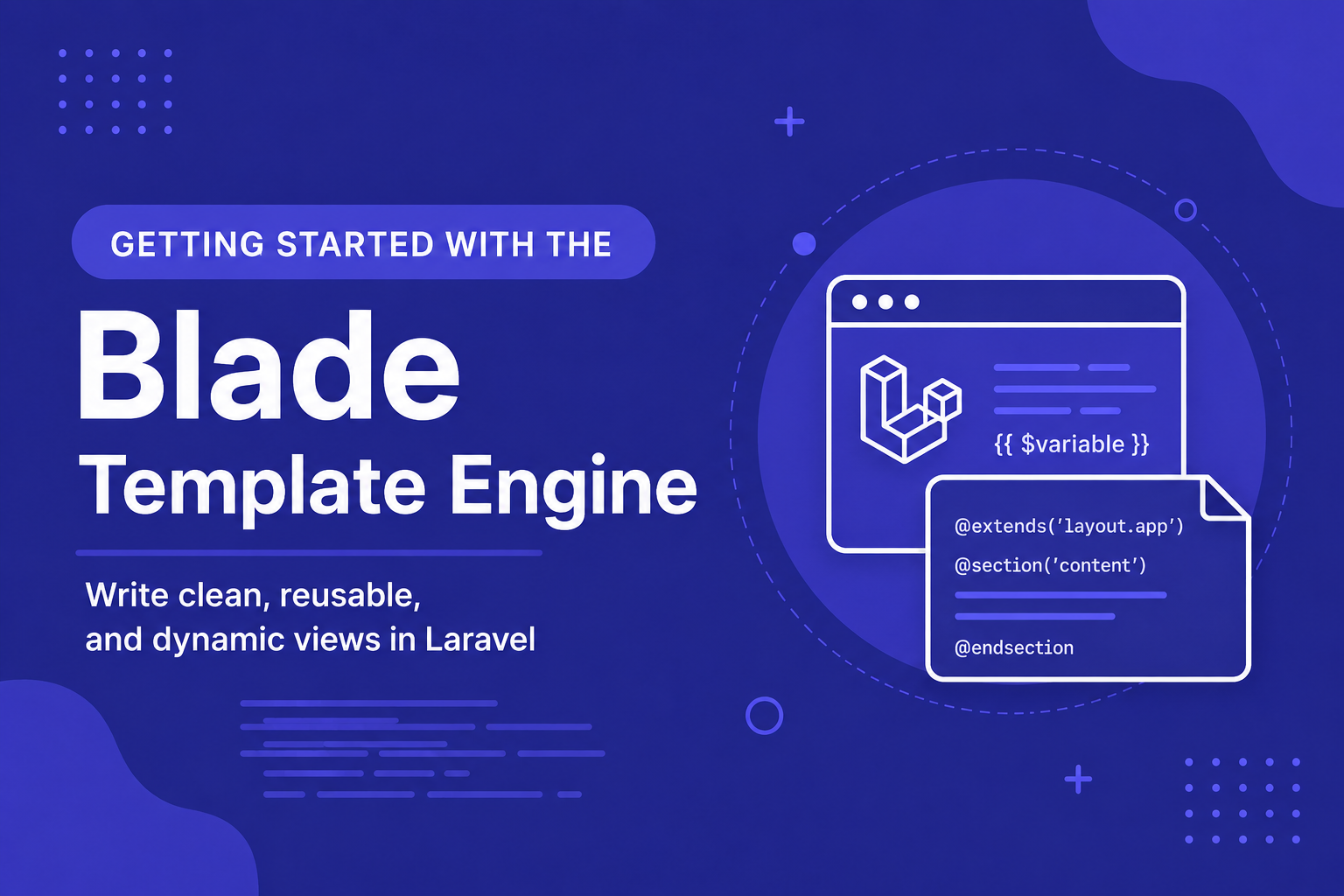
In this article, we'll cover what makes Blade different from plain PHP templates, how to output data safely, and the basic building blocks you'll use in nearly every Blade file you write.
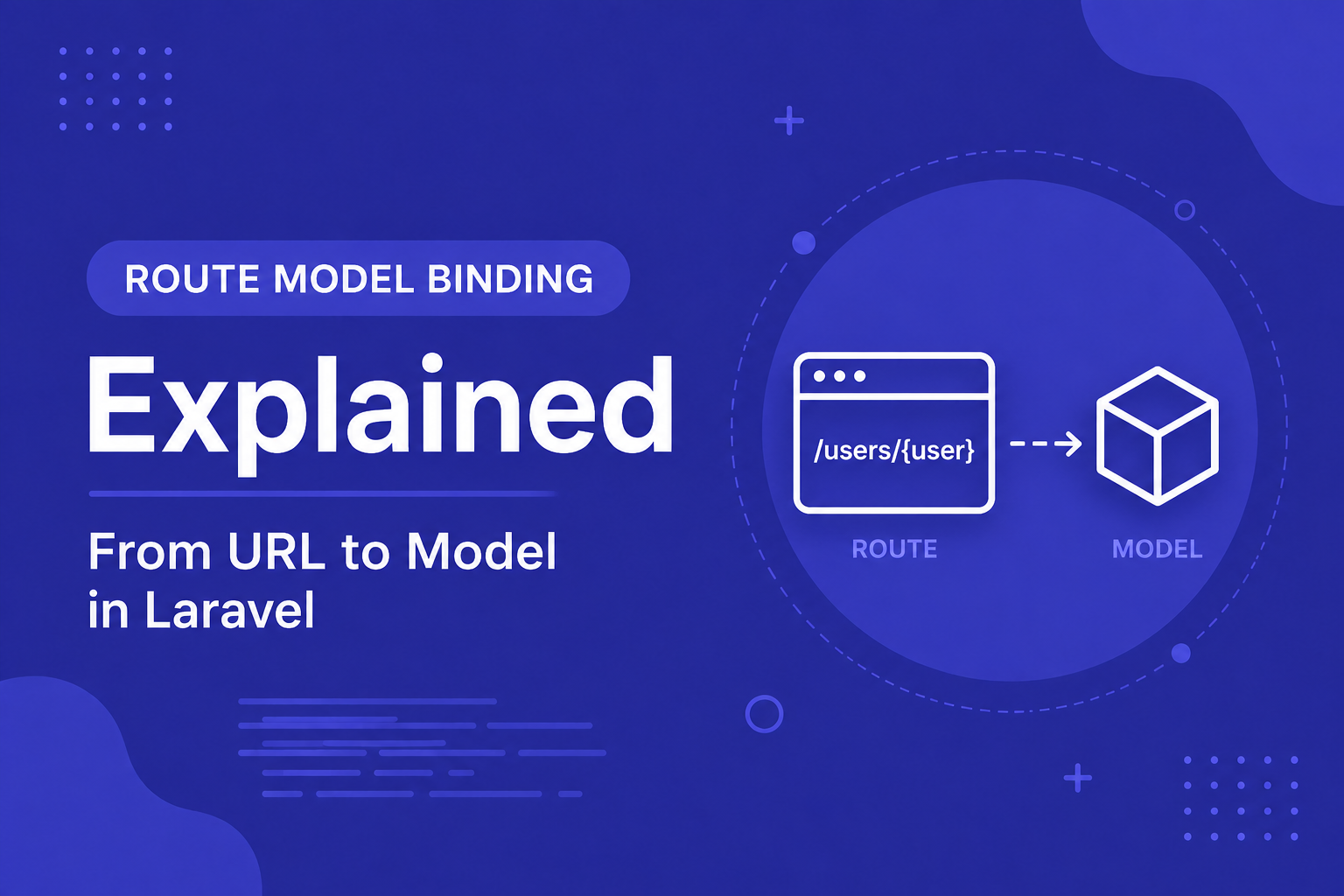
In this final article of our Routing & Controllers, we'll explain how route model binding works, the difference between implicit and explicit binding, and how to customize it for more advanced use cases.
In this article, we'll explain how middleware fits into Laravel's request lifecycle, walk through some commonly used built-in middleware, and show you how to build a custom middleware of your own from scratch.
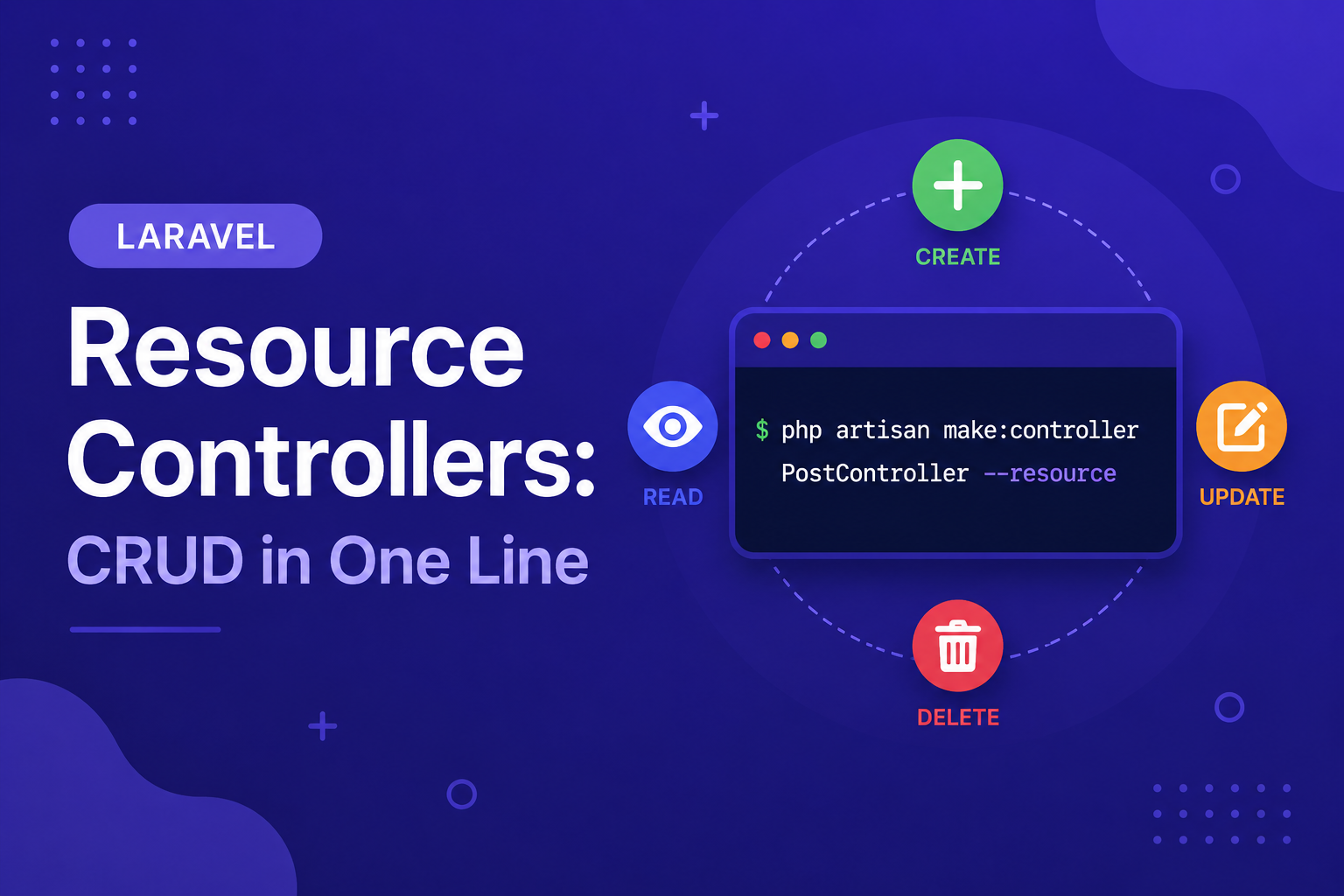
In this article, we'll walk through what resource controllers are, how to generate one, and how the seven standard CRUD methods map to their corresponding routes.
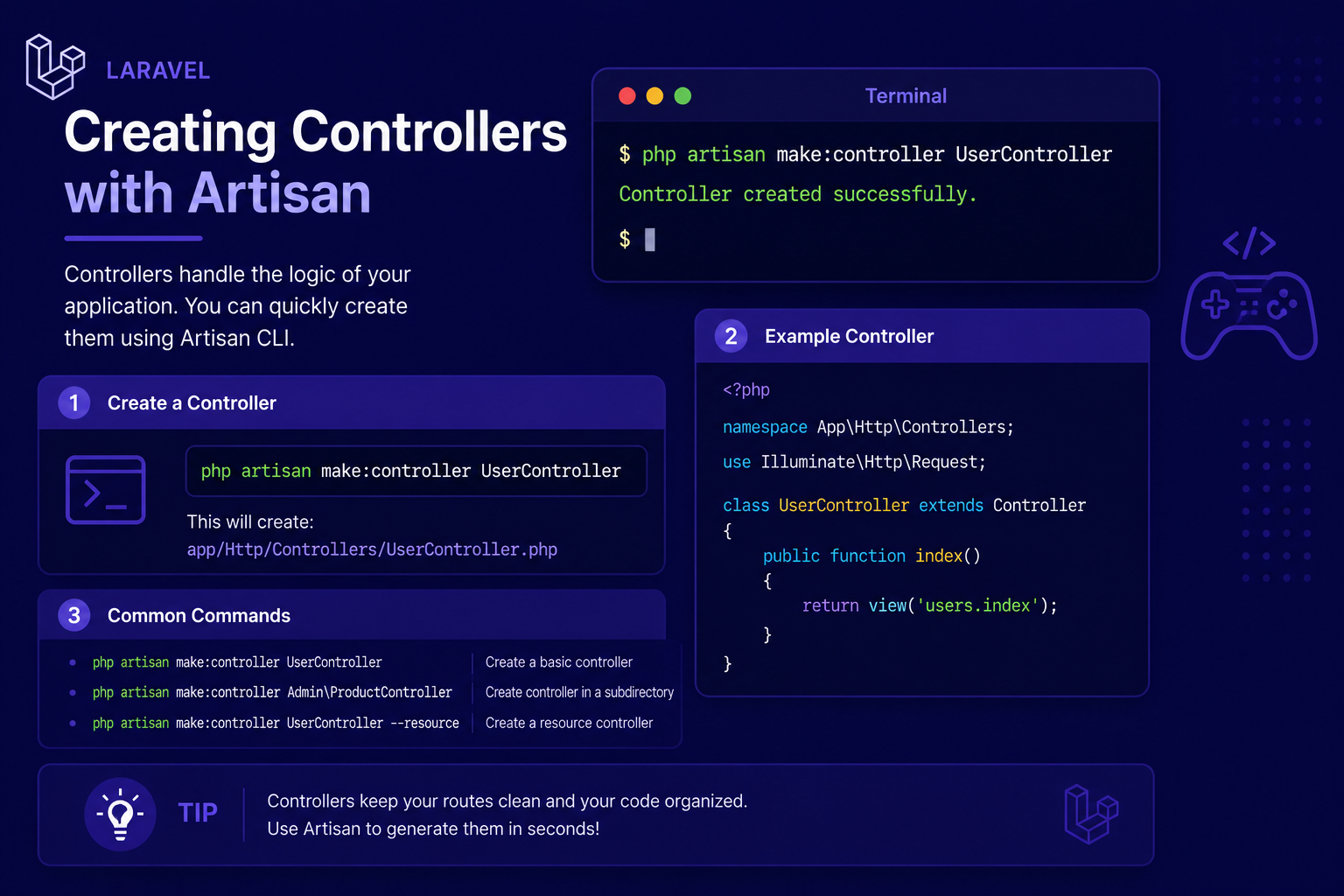
In this article, we'll walk through how to create controllers using Artisan, the different types of controllers Laravel supports, and how to properly connect them to your routes.